Best Dog Ramps for Cars: Who They Help and Who Can Skip Them
Do dogs actually need a ramp to get in the car, or is it one more thing cluttering your trunk? Fair question. Plenty of dogs leap into an SUV just fine and never think twice.
Not all of them, though, and not forever. The best dog ramps for cars exist for a real reason: a hard jump down onto pavement, day after day, beats up a dog’s joints. The trick is knowing whether your dog is one who benefits or one who’ll ignore the thing entirely.
This post contains affiliate links. If you buy through them, we may earn a small commission at no extra cost to you.
Quick honesty up front. A ramp is a mobility aid, not a medical fix. If your dog is limping or slowing down, talk to your vet about what’s going on before you assume a ramp solves it.
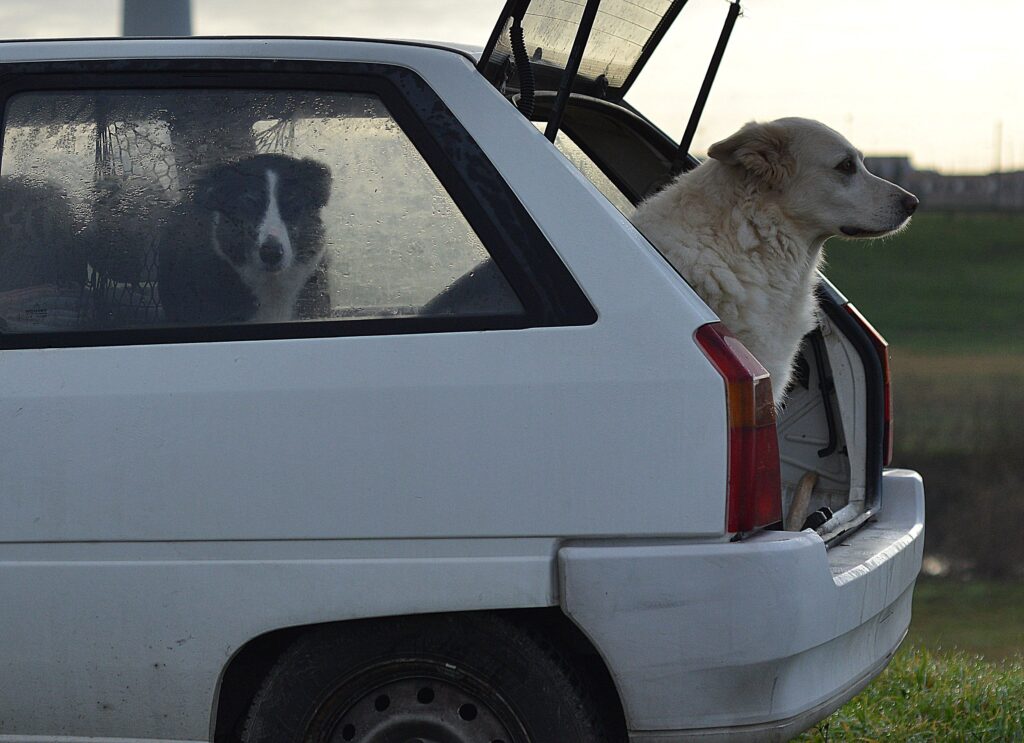
Best dog ramps for cars ? The case against buying one
Let’s start skeptical, because most buying guides won’t. A young, athletic dog with healthy joints doesn’t need help climbing into a car. Push a ramp on a dog like that and you just train it to stand around while you wrestle with gear it never needed.
Space is the next problem. A full-length ramp can eat half your cargo area, and a flimsy folding one rattles and slides if you don’t anchor it. Cheap models flex under a heavy dog, which feels unstable and makes the whole thing scarier to use.
And here’s the part nobody warns you about: a lot of dogs are afraid of ramps at first. A wobbly, unfamiliar surface underfoot is exactly what a nervous dog hates. Without some patient training, even the best dog ramps for cars end up folded in the garage, gathering dust.
Price is worth a reality check too. A solid ramp runs anywhere from sixty bucks to nearly two hundred, and the cheapest ones often skimp on length or grip, the two things that actually make a ramp usable. Buy the wrong one and you’ve spent money to confirm your dog won’t touch it. So before you buy anything, it’s worth being honest about whether your dog is really in the group that needs one.
The case for the best dog ramps for cars
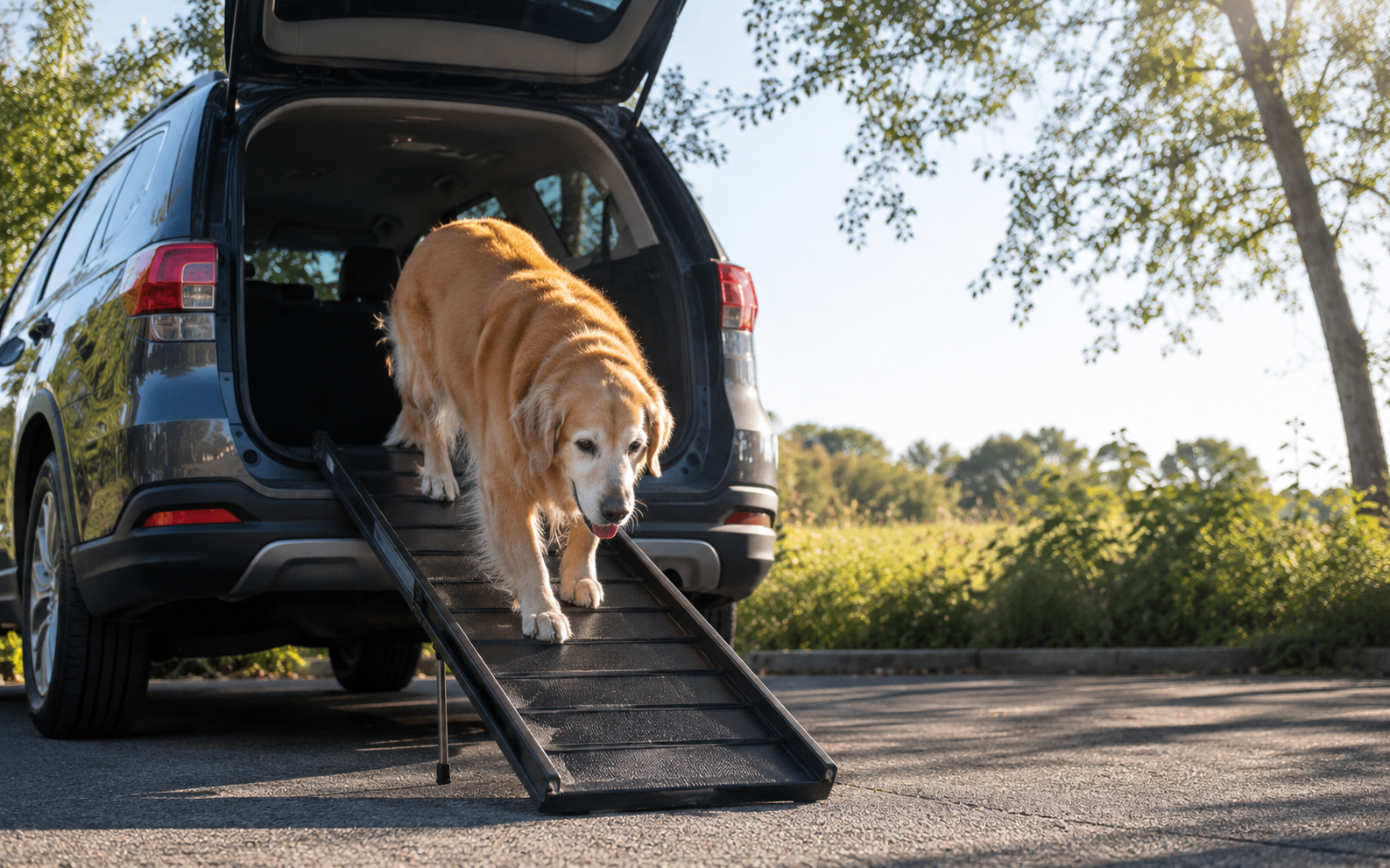
Now the other side. Watch an older dog hesitate at the back of an SUV, then land hard on its front legs, and the appeal clicks fast. That repeated impact wears on hips, elbows, and shoulders, and it adds up worst in big breeds and seniors. A ramp turns a jarring drop into a simple walk down.
It isn’t only an old-dog thing. A dog recovering from surgery, a long-backed breed like a dachshund, or a giant breed whose weight makes every landing harder all benefit from a gentle slope instead of a leap. There’s a human side too. Hoisting an 80-pound lab into a tailgate twice a day is its own back injury waiting to happen. The best dog ramps for cars protect both of you.
Done right, a ramp also buys independence. A dog that can load itself, calmly, doesn’t need lifting or coaxing, which matters on long trips and vet runs when everyone’s already stressed. And the savings aren’t only physical. A dog that trusts the ramp loads faster, so you spend less time standing in a parking lot negotiating with a nervous animal.
Who actually needs one, and who doesn’t
Skip it if your dog is young, healthy, and clears the jump without a thought. Save the trunk space and the money.
Get one if any of these sound familiar:
- A senior who’s started hesitating at the car or landing hard on the front legs.
- A large or giant breed (lab, shepherd, great dane) where every jump is a heavy impact on the joints.
- A long-backed dog like a dachshund or corgi, where jumping strains the spine.
- A dog recovering from surgery or managing arthritis, with your vet’s okay.
- A tall vehicle (a truck or lifted SUV) where even a willing dog has to launch itself up.
Be honest about the human side, too. If you’ve got a bad back, or a dog that’s simply too heavy to lift safely, the ramp is as much for you as for the dog.
One more group worth flagging: puppies of giant breeds. A great dane or mastiff puppy is still growing, and repeated hard landings during that stretch aren’t doing those joints any favors. You won’t need the ramp forever in that case, but a year or two of easier exits while the body matures is a reasonable call. When in doubt, your vet can tell you whether your dog’s size, age, or history puts it in the group that benefits.
What separates the best dog ramps for cars from junk
If you decide one of the best dog ramps for cars belongs in your trunk, a few things actually matter. The rest is marketing.
- Length and slope. Longer is gentler. Aim for a ramp roughly 2.5 to 3 times your vehicle’s load height, so the climb stays shallow for stiff joints.
- Traction. A grippy, skid-resistant surface (ideally one that still grips wet) is what keeps a nervous dog moving instead of freezing.
- Width. A wider deck feels less like a balance beam, which matters a lot for anxious or wobbly dogs.
- Weight rating and build. Match the rated capacity to your dog with room to spare, and skip anything that flexes badly when loaded.
- Stability. Rubber feet and a safety tether or lip that hooks the bumper keep the ramp from sliding mid-climb.
Best dog ramps for cars worth buying
Three picks, covering a tight budget up to a truck-ready workhorse. All three were in stock and priced as listed when we checked. Match the ramp to your vehicle height and your dog’s size first, then let budget break the tie.
Solvit Ultralight Bi-Fold Dog Ramp: $59.99 (best for tight budgets)
Start here if you’re not even sure your dog will use a ramp. The Solvit Ultralight Bi-Fold folds in half, stays light enough to carry one-handed, and won’t swallow your whole cargo area. It’s the low-risk way in: cheap enough that you’re not out much if your dog needs a week of convincing. The lighter build suits small and medium dogs better than a 120-pound mastiff, so size it to your dog. At $59.99, it’s the easiest yes on this list. Who should skip it: owners of giant breeds or very tall trucks, where you’ll want more length and a sturdier deck.
Shop: Solvit Ultralight Bi-Fold Dog Ramp (RadioFence.com)
Pet Gear Tri-Fold Pet Ramp: around $78 (best footing for nervous dogs)
This is the one for a dog that’s spooked by ramps. At 19.5 inches it’s one of the widest decks out there, so a hesitant dog has room to walk instead of tightrope. The skid-resistant tread grips even when wet, rubber feet and a safety tether hold it in place, and it supports dogs up to 200 pounds. It folds in three and has a carry handle. Around $78 on sale, it’s the sweet spot between price and confidence. For an anxious dog, the extra width pays for itself the first time they walk down calmly. The trade-off is bulk: tri-fold ramps are chunkier folded than a bi-fold, so check it fits your trunk before you buy.
Shop: Pet Gear Tri-Fold Pet Ramp (petgearinc.com)
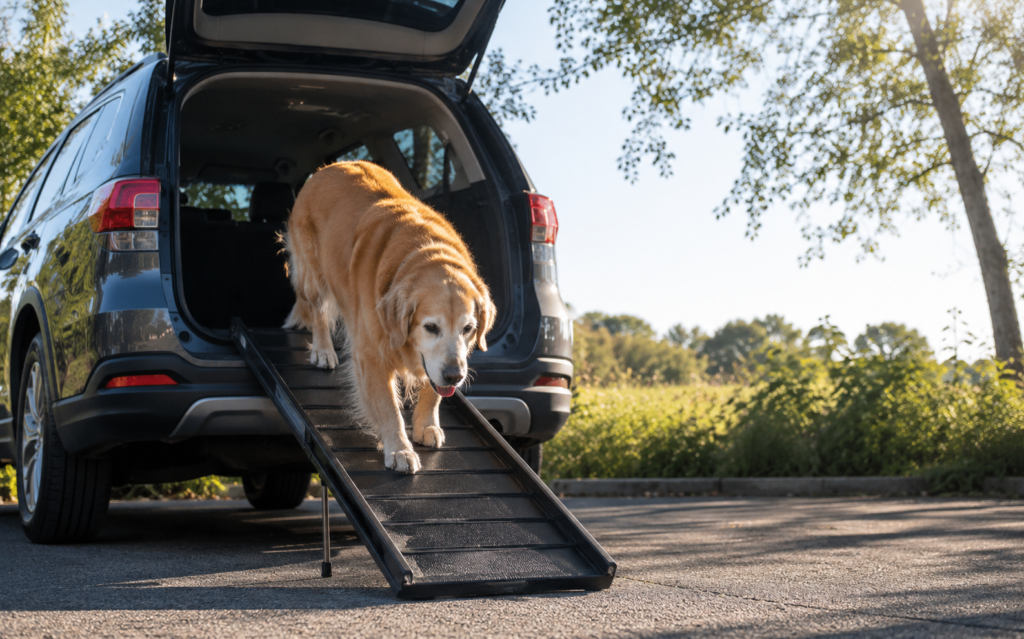
PetSafe Deluxe Telescoping XL Dog Ramp: $179.99 (best for trucks and big dogs)
Drive a truck or a lifted SUV? This is your ramp. It telescopes out long, and length is exactly what keeps the slope gentle enough for a heavy or arthritic dog climbing into a high tailgate. It’s extra-large and built for real, repeated use, the kind of thing that holds up to a 90-pound dog using it twice a day for years. It’s also the priciest pick at $179.99, plus heavier and bulkier than the others, so it’s overkill for a sedan. But for a big dog and a tall vehicle, the shorter ramps simply won’t reach without turning into a cliff. You’re paying for the reach and the build, and both are worth it here. If your situation fits, this is the one that lasts.
Shop: PetSafe Deluxe Telescoping XL Dog Ramp (RadioFence.com)
Getting your dog to actually use it
Buying the ramp is the easy part. Even the best dog ramps for cars do nothing if your dog refuses to set a paw on them, and plenty do at first. A little setup saves you a lot of frustration.
Start on the ground, not the car. Lay the ramp flat, let your dog sniff it, and toss treats across it so walking over it feels like no big deal. Once they cross it without flinching, prop it at a gentle angle and reward each step up. Only then connect it to the car. Keep early sessions short, upbeat, and bribe-heavy. Most dogs come around within a week, and the nervous ones just need the wider deck and a slower pace. Never drag or force a scared dog up a ramp, because one bad scare can set you back weeks.
Best dog ramps for cars: The honest verdict
So, do you really need one? Plenty of dogs don’t. If yours is young and bounds in without a thought, keep your money and your trunk space. But if you’ve got a senior, a giant breed, a long-backed dog, or a vehicle tall enough to make every exit a leap, the best dog ramps for cars are a small price for years of saved joints.
Testing the waters, start with the Solvit Bi-Fold. Got a nervous dog, the wider Pet Gear is the safer bet. Driving something tall with a big dog, go straight to the PetSafe telescoping ramp. Then spend a week actually training your dog to use it, with treats and patience, because the best ramp on earth does nothing while it sits folded in the garage.
Impact-Site-Verification: 9ddf6946-dc6a-4a22-8b23-e503894cc936