Best Dog Doors for Large Dogs Across 3 Budgets (2026 Guide)
Most dog door guides hand you a top-10 list and call it a day. That’s not much help when you’re 90 pounds of Labrador short on a door that fits. The best dog doors for large dogs aren’t about brand hype, they’re about a few measurable specs, and getting one of them wrong costs you real money.
Buy too small and your dog won’t use it, or will force it and bend the frame. Buy a thin single flap and you’ll feel the draft on your heating bill all winter. This guide skips the fluff and walks through what actually matters, what the marketing hides, and three doors worth buying at three price points.
This post contains affiliate links. If you buy through them, we may earn a small commission at no extra cost to you.
Why the wrong large-dog door gets expensive fast
A dog door is a hole in your house. Done right, it’s convenient. Done wrong, it’s a draft, a security gap, and a thing your dog refuses to touch.
Big dogs make every mistake bigger. A flap sized for a beagle won’t clear a shepherd’s shoulders. A flimsy vinyl flap that a terrier ignores becomes a chew toy for a bored 80-pound dog. And a poorly sealed door leaks conditioned air all day, which is why insulation matters more on a large opening than a small one. The best dog doors for large dogs treat the size as an engineering problem, not an afterthought.
The 5 specs that matter in dog doors for large dogs
Ignore the star ratings for a minute. These five things decide whether dog doors for large dogs actually work, in roughly the order that matters.
1. Flap opening size (measure, don’t guess)
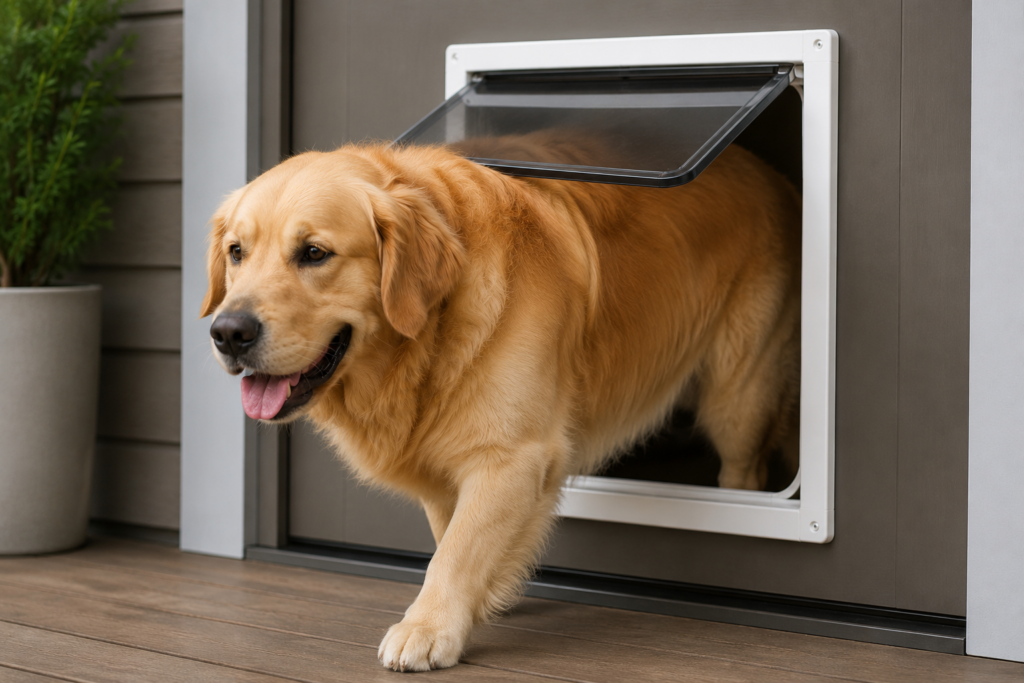
This is the most common mistake with dog doors for large dogs. The flap has to clear your dog’s widest point, usually the shoulders, plus their standing height. Measure shoulder width and the height from floor to the top of the back, then add an inch or two. A weight rating like ‘up to 100 lbs’ is a rough hint, not a measurement. Two dogs at the same weight can need different openings, so trust the tape measure over the label.
2. Frame material: aluminum vs plastic
For a large dog, frame material is durability. Plastic frames are cheaper and fine for gentle dogs, but an aluminum frame shrugs off the leaning, pawing, and shoving a big dog delivers daily. If your dog is rough or a chewer, pay for metal.
3. Insulation and flap count
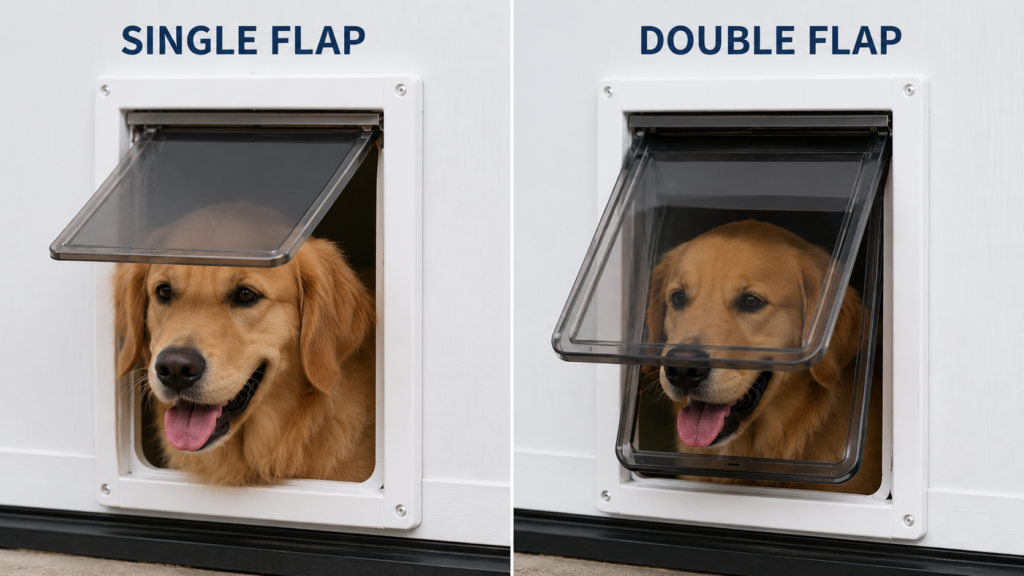
One thin flap is a draft waiting to happen. Double and triple-flap doors trap a pocket of air between layers, which cuts the heat loss. The numbers are real: a premium flap can run about 7/8 inch thick versus the roughly 1/8 inch of basic vinyl, and multi-flap doors are rated several times more efficient than single-flap ones. On a large opening, that gap shows up on your utility bill, which is where the better dog doors for large dogs justify their price.
4. Installation type: door, wall, or glass
Door-mount is the simplest and fits most homes. Wall-mount needs a tunnel and more labor but suits brick or homes without a good door. Sliding-glass inserts are renter-friendly because they don’t cut anything. Pick the install that matches your home before you fall in love with a flap.
5. Security and locking
Any door to the outside is a potential entry point. Look for a solid locking cover or panel you can slide in when you’re away. For keeping raccoons and neighborhood cats out, an electronic door that reads your dog’s microchip or collar tag is worth considering, with the caveat that it needs batteries.
What the marketing won’t tell you
A few things the product pages for dog doors for large dogs gloss over, learned the hard way by owners.
- Bigger isn’t always better. An oversized flap is heavier to push and leaks more air, so size to your dog, not to the largest option on the shelf.
- ‘Energy efficient’ is a loose claim. Look at flap count and seal design (magnets on all edges beat a single bottom magnet), not the buzzword.
- Wall installs cost more than the door. Budget for the tunnel kit, the labor, and patching, not just the sticker price.
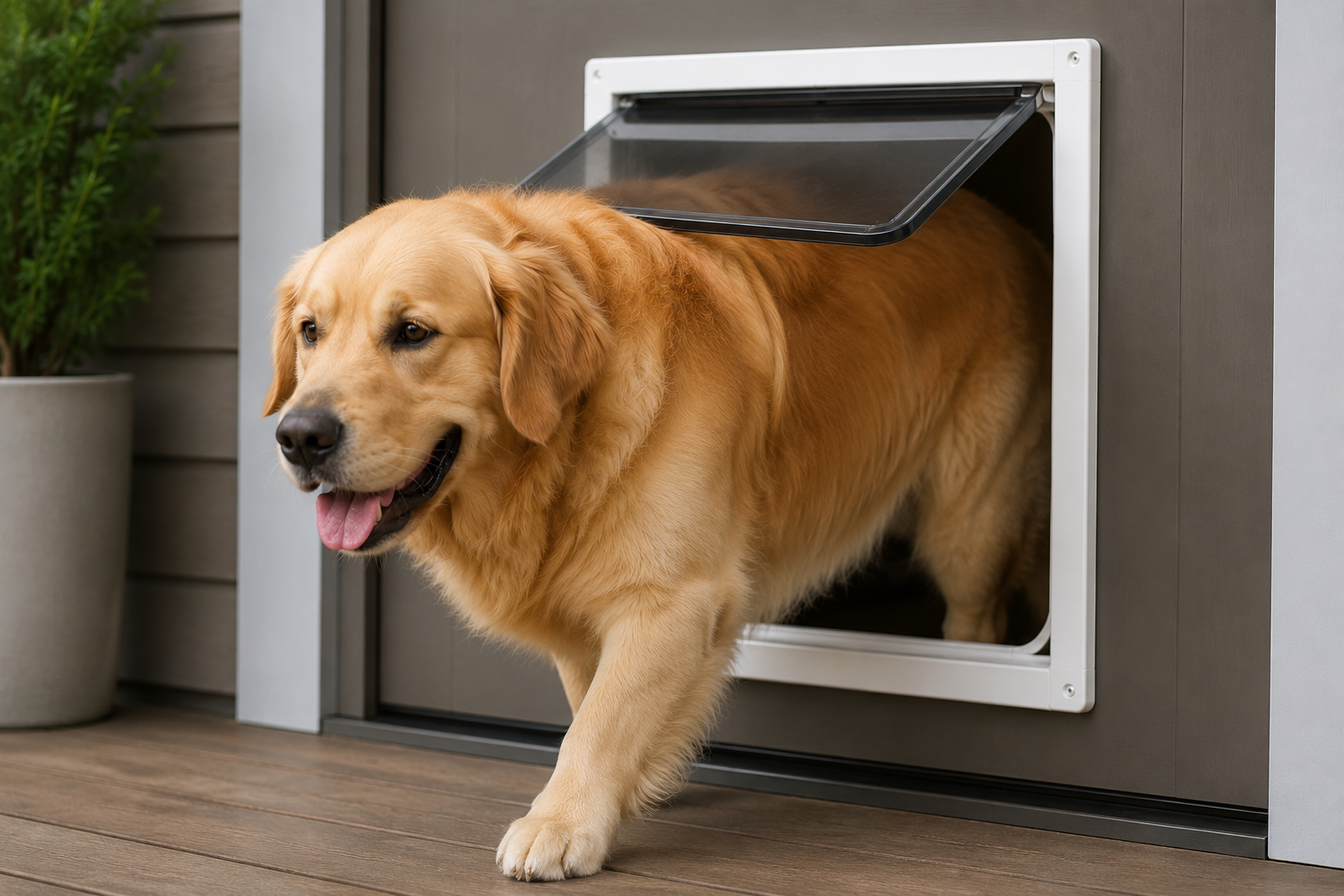
- A determined large dog can wreck a cheap flap. Thickness and material matter more than the picture of a happy golden retriever on the box.
Price tiers: what your money actually buys
Dog doors for large dogs start higher than small ones, simply because the opening and hardware are bigger. Here’s the honest lay of the land, and what you give up at each step down.
Around $100 gets you a sturdy single-flap door, often with an aluminum frame, that handles weather adequately and survives a big dog. Around $120 moves you to an insulated multi-flap door that noticeably cuts drafts. From roughly $280 and up, you’re in premium territory: engineered double-flap doors with heavy seals, made for extreme climates and backed by long warranties.
Two things shift the price beyond the flap itself. Wall-mount and sliding-glass versions sit at the top of the range because of the extra hardware and tunnel. And electronic, selective-entry doors cost more again. For most owners shopping dog doors for large dogs, a quality door-mount in the right tier is the practical sweet spot.
The 3 best dog doors for large dogs by budget
One pick per tier, all confirmed in stock and priced as listed when we checked.
| Door | Best for | Price | Tier |
| PetSafe Freedom Aluminum, Large | Sturdy, simple, value | $104.95 | Value |
| PetSafe Extreme Weather, Large | Cutting drafts and bills | $119.95 | Mid |
| Endura Flap Door Mount (Large) | Extreme climates, longevity | From $279.99 | Premium |
Value pick: PetSafe Freedom Aluminum Pet Door, Large ($104.95)
If you want a straightforward door that won’t fold under a big dog, the Freedom is the sensible floor. The aluminum frame is the selling point: it handles the daily shove of a large dog better than plastic, and it’s paintable to match a door. It’s a single flap, so don’t expect premium insulation, but for a mild climate or a garage-to-yard run, it does the job for about a hundred bucks.
Where to buy: PetSafe Freedom Aluminum Pet Door, Large (RadioFence.com)
Mid pick: PetSafe Extreme Weather Pet Door, Large ($119.95)
For not much more, the Extreme Weather adds the thing the Freedom lacks: real insulation. It uses three flaps, including an insulated center flap, which PetSafe rates as far more efficient than a single-flap door. If you live somewhere with actual winters or summers, this is the value-to-comfort sweet spot among dog doors for large dogs. The frame is plastic, so it’s less rugged than aluminum, but the energy savings are the point here.
Where to buy: PetSafe Extreme Weather Pet Door, Large (RadioFence.com)
Premium pick: Endura Flap Door Mount, Large (from $279.99)
When climate and longevity matter, the Endura Flap is the engineer’s choice. The flap is about 7/8 inch thick, dual-layer, and seals magnetically on all edges, rated for winds up to 50 mph and temperatures from minus 40 to 110 degrees. It’s made in the USA with an aluminum frame and a lifetime warranty, and the large flap measures roughly 10 by 19 inches. You pay for it, starting near $280 and climbing with size and install type, but it’s the closest thing to a permanent answer.
Where to buy: Endura Flap Door Mount Pet Door, Large (enduraflap.com)
Red flags to avoid
When you’re comparing dog doors for large dogs, steer clear the moment you see these:
- A door sold purely by weight rating with no flap dimensions listed. Dimensions are what matter.
- Thin vinyl flaps marketed for large or extra-large dogs. They tear and chew through fast.
- Vague ‘weatherproof’ claims with a single flap and one bottom magnet. That’s a draft with marketing.
- Sliding-glass inserts that don’t list a track height range. If it doesn’t match your door, it won’t seal.
FAQ
How do I size dog doors for large dogs?
Measure two things: your dog’s shoulder width and their standing height from the floor to the top of the back. The flap opening needs to clear both, plus an inch or two of margin. When a dog falls between sizes, go up a size for width but keep the step-over height comfortable.
Aluminum or plastic frame for a big dog?
Aluminum if your dog is rough, strong, or a chewer, because it survives the abuse. Plastic is fine for a calm dog and saves money. For most large dogs that use the door dozens of times a day, the aluminum upgrade pays off in fewer replacements.
Are insulated double or triple-flap doors worth it?
In a real climate, yes. A single thin flap leaks conditioned air, and on a large opening that adds up. Multi-flap doors trap an insulating air pocket and seal better, which you’ll notice on the heating and cooling bill more than on a small cat door.
Can a large dog break through a dog door?
A determined dog can damage a cheap flap or a flimsy frame, which is exactly why material and a secure locking cover matter. A sturdy aluminum frame with a thick, magnet-sealed flap holds up to normal large-dog use, and a locking panel adds security when you’re away.
The verdict
Skip the hype and start with a tape measure. The best dog doors for large dogs are the ones sized to your specific dog and built for your specific climate, not the ones with the flashiest listing.
Tight budget and a mild climate, the PetSafe Freedom does the job. Want lower bills without overspending, the Extreme Weather is the smart middle. Harsh weather or a forever install, the Endura Flap earns its price. Get the size and the install right, and the best dog doors for large dogs pay you back in comfort and a door you only buy once. Measure first, match the install to your home, and you’ll buy one door instead of three.