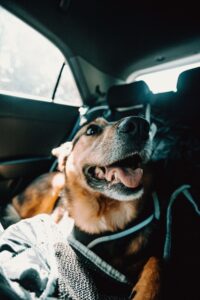
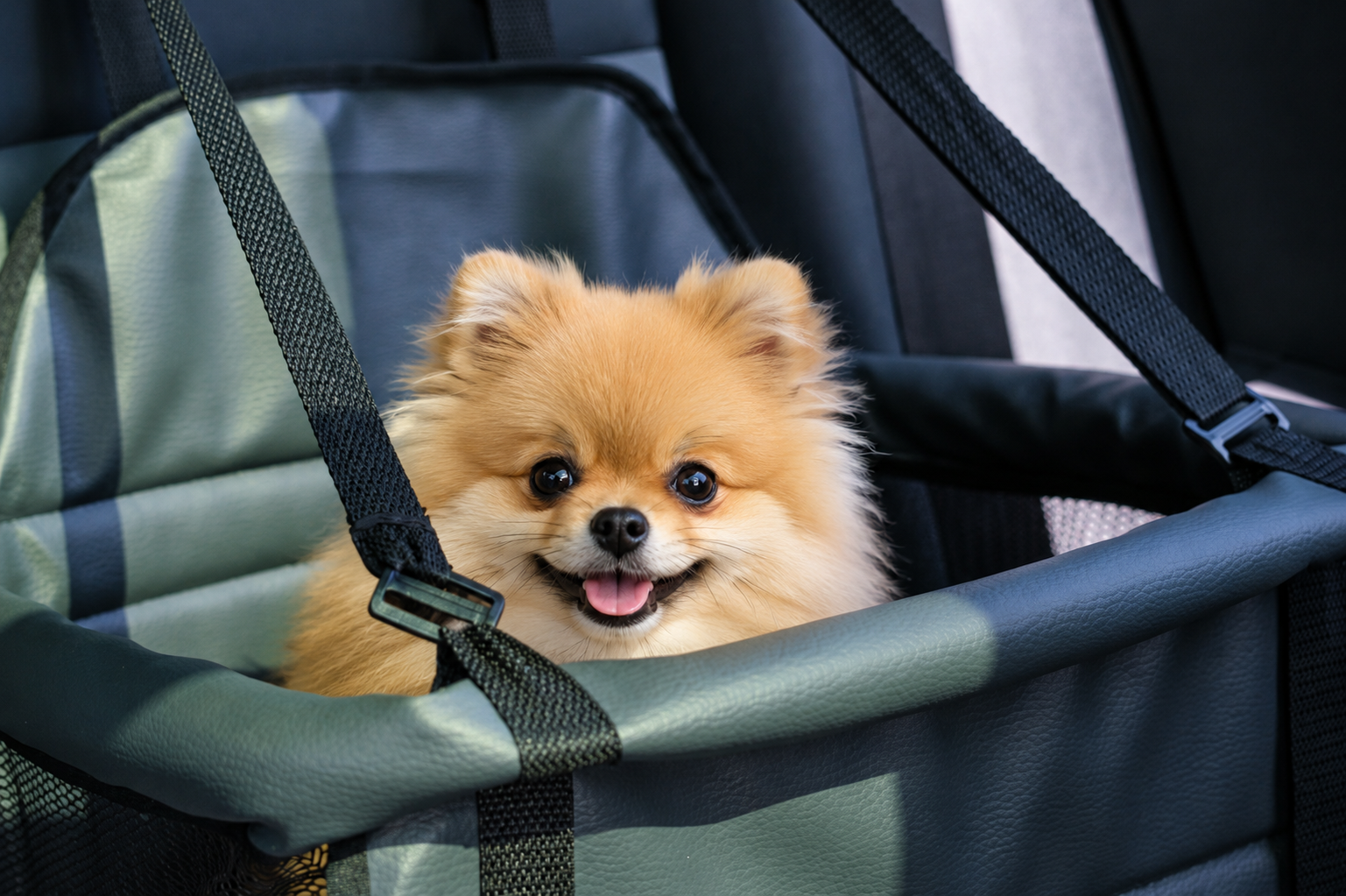
Best Dog Car Seats for Small Dogs: 5 Things That Actually Keep Them Safe
A small dog loose in a moving car is a bad idea waiting to happen. One hard stop and a 12-pound dog becomes a projectile, or worse, slides under the brake pedal at exactly the wrong moment. The best dog car seats for small dogs fix that, but only if you understand what they actually do, and what they don’t.
Here’s the part the cute product photos skip: most dog car seats restrain and lift your dog, they don’t protect it in a real crash. A few are genuinely crash-tested. The rest are comfort and control. This guide sorts the difference, walks through what matters, and names three picks across three budgets.
This post contains affiliate links. If you buy through them, we may earn a small commission at no extra cost to you.
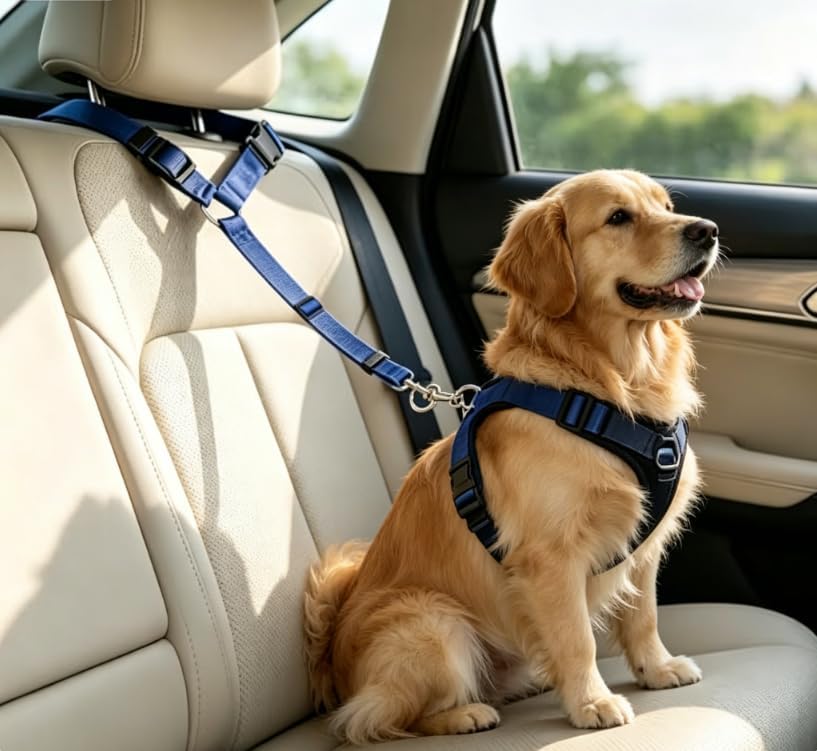
One thing up front. Whatever seat you choose, your dog still needs a harness, never a collar, tethered to it. The seat without the tether is half a system.
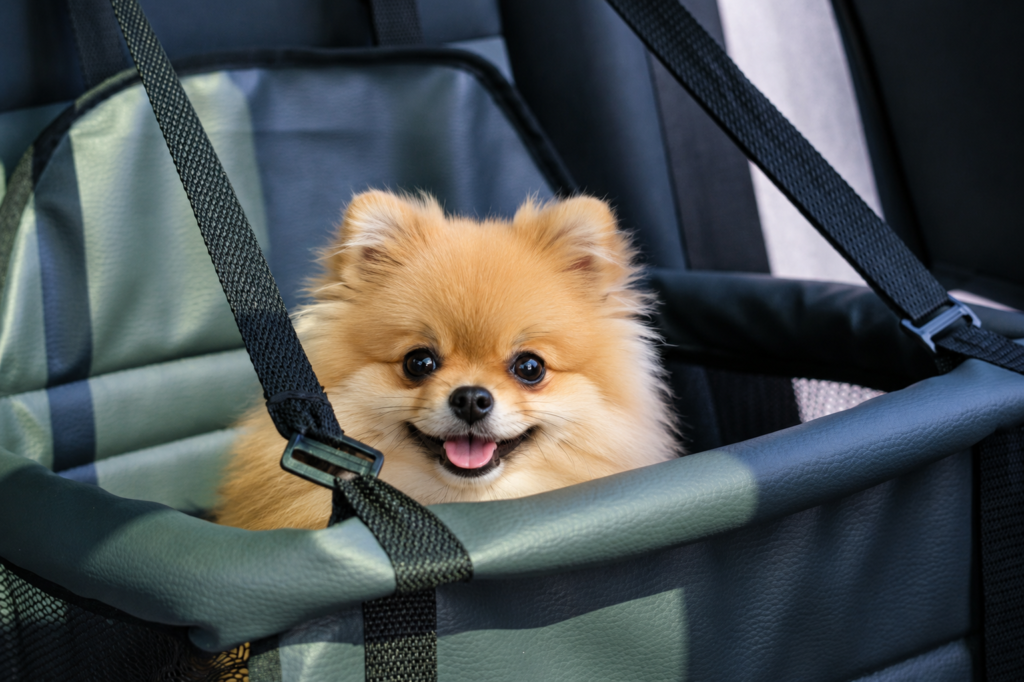
Why the wrong small-dog car seat is a real risk
Buy on looks alone and you can end up with a soft basket that lifts your dog for the view but does nothing to hold it in a sudden stop. That’s not safety, that’s a cushion. For a small dog, the gap between those two things is the whole point.
There’s a human risk too. A dog roaming the footwell or your lap is a distraction, and near an airbag it’s a danger to both of you. The best dog car seats for small dogs solve the safety problem and the distraction problem at once, which is why it’s worth getting right instead of grabbing the cheapest basket on the shelf.
The 5 things that actually matter in dog car seats for small dogs
Ignore the fabric swatches for a minute. These five decide whether a seat is worth buying.
1. Crash protection vs simple restraint
Be honest with yourself about what you need. Most seats are restraint and comfort: they clip to the belt and keep your dog contained. Only a few are independently crash-tested to actually absorb a collision. If crash performance matters to you, buy a tested design and accept the price. If you mainly want your dog secured and off your lap, a quality restraint seat is enough.
2. A real attachment system
The seat has to anchor to your car’s seatbelt, and your dog has to tether to the seat through a harness. Both halves matter. A seat that only sits there, or a tether you’d clip to a collar, is a neck injury waiting to happen. Look for a built-in tether and a seatbelt loop, and pair it with a padded harness.
3. Structure that won’t collapse
A floppy seat folds in a hard stop. For a booster, you want internal framing or rigid sides that hold their shape under load, so your dog stays put instead of being thrown forward with the fabric.
4. The right size and weight rating
Match the seat to your dog’s weight, not the biggest number on the box. A small dog swimming in an oversized seat can still get tossed around. Most small-dog seats top out around 25 to 30 pounds, so check the rating against your dog.
5. Comfort and a view
This isn’t just pampering. Raising a small dog high enough to see out the window genuinely calms anxious and carsick dogs, which means less squirming and a safer ride. A miserable dog fights the seat. A calm one settles in.
What the marketing won’t tell you
A few honest points the listings gloss over.
- ‘Crash-tested’ is used loosely. Few seats are independently tested to a real standard, so look for specifics, not just the phrase.
- A booster lifts and contains, it doesn’t restrain on its own. Without a harness tether, your dog still flies forward in a stop.
- Never clip the tether to a collar. The force in even a minor crash can injure a small dog’s neck. Use a harness, every time.
- The back seat is safest. A small dog up front, especially in your lap, is in the airbag’s path.
Price tiers: what your money buys
Small-dog car seats split cleanly into three price bands, and you get something real at each step.
Around $50 to $65 buys a basic booster or console seat: it lifts your dog, clips to the belt, and gives a tether point, with comfort and a window view. Around $90 to $100 moves you to a structured booster with internal framing and a sturdier build that holds its shape. From roughly $200 and up, you’re paying for genuinely crash-tested designs built to absorb a collision, not just contain your dog. None of those tiers is wrong; they’re answers to different questions about the best dog car seats for small dogs.
The 3 best dog car seats for small dogs by budget
One pick per tier, all confirmed in stock and priced as listed when we checked.
| Seat | Best for | Price | Tier |
| Snoozer Console Dog Car Seat | Budget, center-console riders | From $55.95 | Value |
| Kurgo Skybox Rear Seat Booster | Structured everyday booster | $94.95 | Mid |
| PupSaver Original | Crash-tested safety | $209.95 | Premium |
Value pick: Snoozer Console Dog Car Seat (from $55.95)
If you just want your dog secured, lifted, and out of your lap without spending much, the Snoozer Console is the sensible floor. It nests into the center console area, gives a tether point for a harness, and adds a comfy cushion a nervous small dog will settle into. It’s restraint and comfort, not crash protection, but for short trips and errands at around $56, it covers the basics well.
Where to buy: Snoozer Console Dog Car Seat (snoozerpetproducts.com)
Mid pick: Kurgo Skybox Rear Seat Booster ($94.95)
Want something sturdier for an active dog and regular drives? The Kurgo Skybox is a rear-seat booster with internal metal supports, so it holds its structure instead of sagging, and it’s rated for dogs up to 30 pounds. It clips to the seatbelt and includes a tether for your dog’s harness. For $94.95, it’s the all-in-one middle pick, and it suits the kind of owner who actually takes their dog places.
Where to buy: Kurgo Skybox Rear Seat Booster (kurgo.com)
Premium pick: PupSaver Original ($209.95)
When safety is the whole point, PupSaver is the one that backs it up. It’s a rear-facing, crash-tested dog car seat built to cradle and absorb force in a collision, which almost no other small-dog seat can claim. The Original suits dogs up to 30 pounds, with a Petite version for tiny dogs under 10 and a 45 model for bigger ones. At $209.95, it’s a real investment, but for owners who treat their dog like family in the car, it’s the closest thing to a child’s car seat for a small dog.
Where to buy: PupSaver Crash-Tested Dog Car Seat (pupsaver.com)
Setting it up so it actually works
A great seat installed wrong is just an expensive cushion. Five minutes of setup is what turns the best dog car seats for small dogs into real protection.
Anchor the seat to the back-seat belt and pull it snug, with no slack to slide. Put your dog in a padded harness, never a collar, and clip the seat’s tether to the harness, adjusting it short enough that your dog can sit and lie down but not climb out or reach the front. Then test it: lean on the seat and tug the tether before you ever drive. If anything shifts or feels loose, fix it now, not at 60 miles an hour.
Red flags to avoid
When you compare dog car seats for small dogs, walk away the moment you see these:
- No tether and no clear way to attach a harness. That’s a basket, not a safety seat.
- A flimsy, frameless design that folds when you press on it. It’ll do the same in a stop.
- A seat sized way above your dog’s weight, leaving them loose inside it.
- ‘Crash-tested’ with no standard, video, or detail behind the claim.
FAQ
Do dog car seats for small dogs actually protect in a crash?
Only some do. Most restrain and contain your dog and prevent distraction, which already makes a drive safer, but they aren’t built to absorb a collision. For real crash protection, you need a tested design like the PupSaver. Match your expectations to the type of seat you buy.
Should the tether clip to a collar or a harness?
Always a harness, never a collar. In even a minor stop, a collar tether puts the entire force on your dog’s neck. A padded harness spreads that load across the chest and shoulders, which is far safer for a small dog.
Where should a small dog ride in the car?
In the back seat, secured in a car seat with a harness tether. The front seat puts a small dog in the airbag’s path, and a deploying airbag can seriously injure or kill a small dog. The back is the safe spot.
What size car seat does a small dog need?
Match the weight rating to your dog. Most small-dog seats are built for dogs up to about 25 to 30 pounds, with petite versions for dogs under 10. A snug fit matters: too big, and your dog slides around inside it.
Our final take
Start with one question: do you want your dog simply secured, or genuinely crash-protected? That answer points you straight to a tier. The Snoozer Console covers basic restraint and comfort on a budget, the Kurgo Skybox is the sturdy everyday middle, and the PupSaver is the safety-first splurge.
Whichever you pick, the best dog car seats for small dogs only work as a system: the seat anchored to the belt, your dog harnessed and tethered to the seat, in the back. Set it up that way and every drive gets safer for both of you.