Best Robot Litter Boxes: 5 Ranked by Price, Cleaning, and Running Cost (2026)
Scooping a litter box is nobody’s favorite chore, which is exactly why robot litter boxes have exploded in popularity. These self-cleaning machines rake or rotate waste away after every visit, so the box stays fresh on its own. The catch: they range from about $245 to $700, clean in different ways, and carry hidden running costs the ads never mention. So we did the unglamorous work and compared the best robot litter boxes on the numbers that actually matter.
An honest disclaimer first: we did not run a hundred boxes through a lab. This ranking is built on each model’s confirmed specifications and what real owner reviews consistently report, and we say so plainly. Where a figure isn’t verified, we leave it out.
This post contains affiliate links. If you buy through them, we may earn a small commission at no extra cost to you.
Health note: a robot box helps you stay on top of cleaning, but keep an eye on your cat’s litter habits, since changes can signal illness, and make sure any model’s safety sensors suit kittens and small cats.
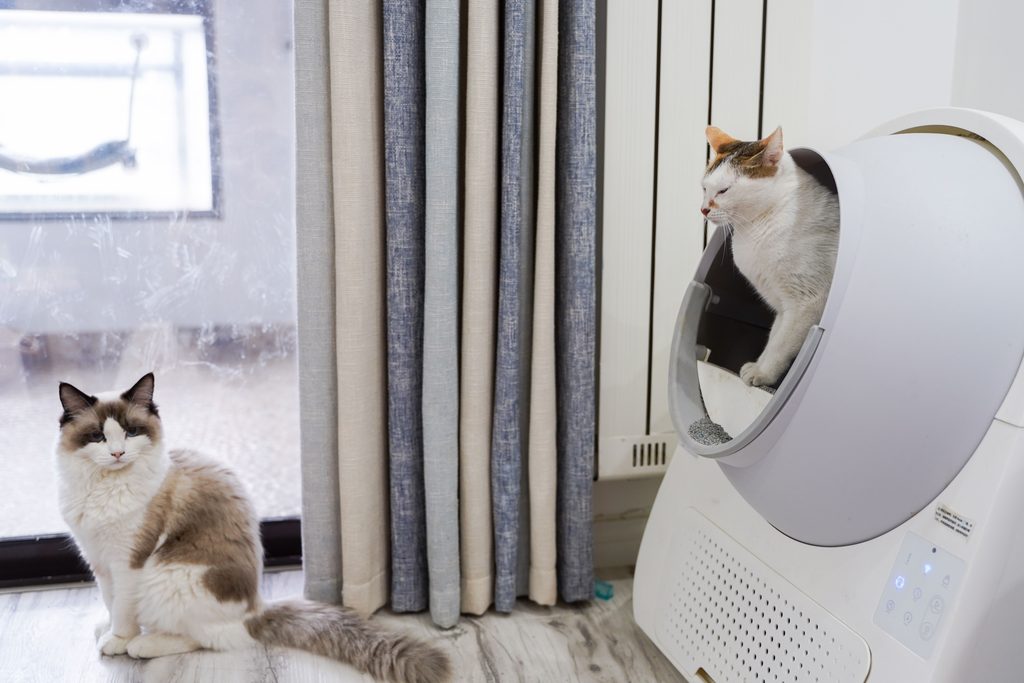
How we evaluated the best robot litter boxes
Five criteria did the sorting, with no single one winning alone:
- Cleaning mechanism. Rotating-globe and rotating-chamber designs sift clumps from standard litter; rake-and-tray systems sweep waste into a compartment. The mechanism shapes both performance and cost.
- Capacity and multi-cat use. Waste-drawer size and entry dimensions. Bigger drawers and larger openings handle more cats and bigger cats.
- Odor and noise. Sealed drawers, carbon filters, and UV sterilization fight smell; quieter cycles are gentler on nervous cats.
- Smart features and safety. App control, weight and usage tracking, and reliable weight or radar sensors that stop the cycle when a cat is inside.
- Running cost. The quiet one. Proprietary trays or special litter add up over a year and can change which box is truly cheapest to own.
With that filter, here’s the honest ranking, from our overall pick down.
The 5 best robot litter boxes, ranked
| Robot litter box | Best for | Litter | Price |
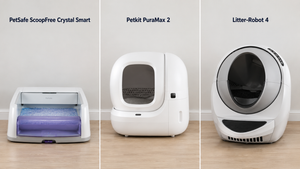
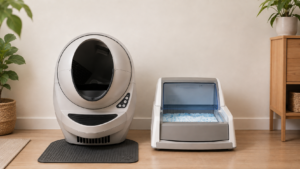
| Litter-Robot 4 | Best overall | Any clumping | $699 |
| Casa Leo’s Loo Too | Odor + value | Any clumping | $599.99 |
| Petkit Purobot Max Pro 2 | Camera + AI | Any clumping | $499.99 |
| Petkit PuraMax 2 | Quiet, value | Any clumping | $399.99 |
| PetSafe ScoopFree Crystal Smart | Budget entry | Crystal trays | $244.99 |
Best robot litter boxes overall: Litter-Robot 4 ($699)
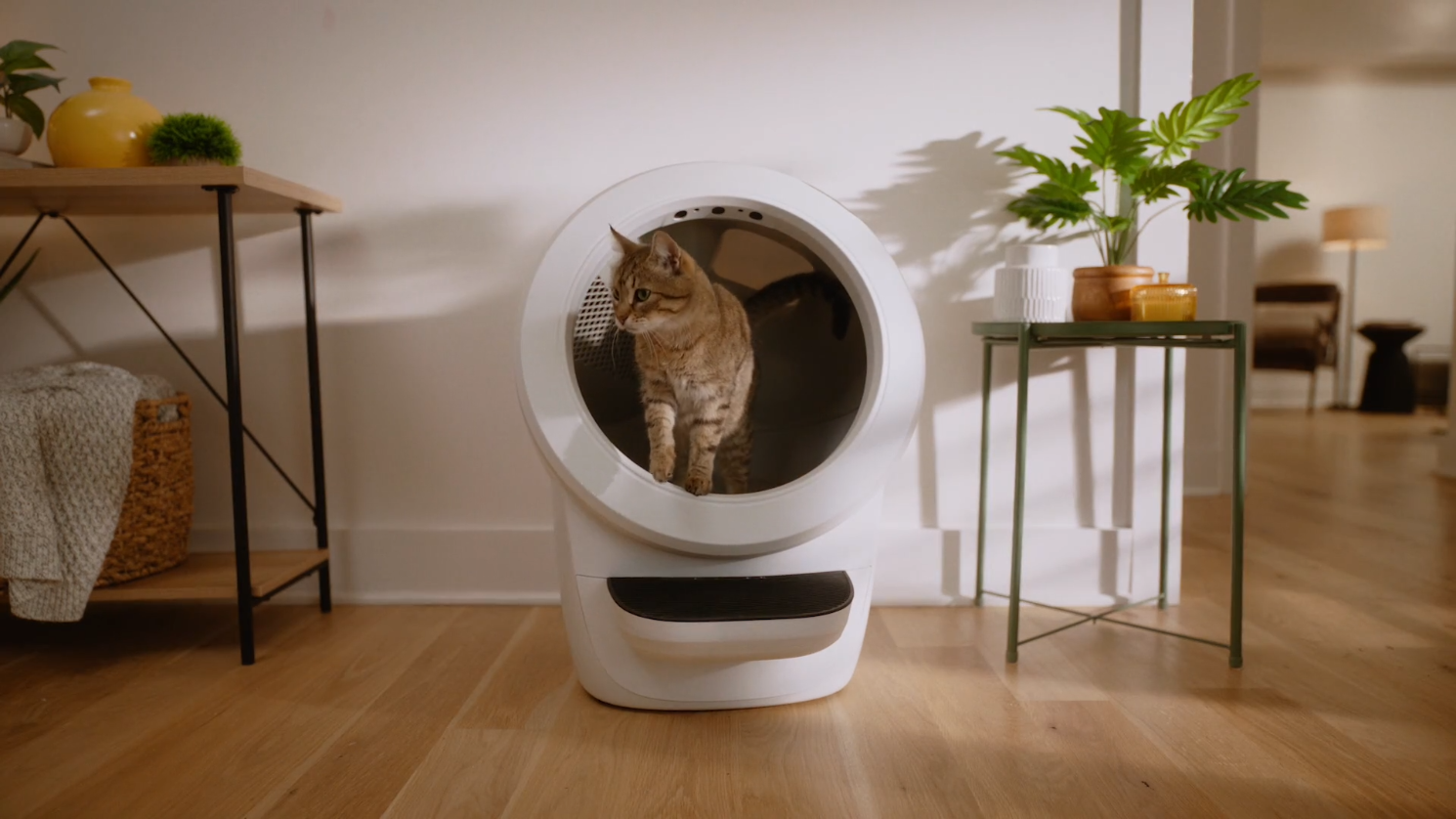
The benchmark, and the one to beat. The Litter-Robot 4 uses a rotating globe that sifts clumps from ordinary clumping litter into a large, carbon-filtered sealed drawer, so odor control and capacity are excellent and everyday litter stays cheap. It’s quiet, app-connected, tracks your cat’s weight and usage, and handles multi-cat homes with ease.
Strength: the most refined, reliable all-rounder with low running costs. Drawback: at $699 it’s the most expensive here, so it asks for real commitment up front.
Where to buy: Litter-Robot 4 (litter-robot.com)
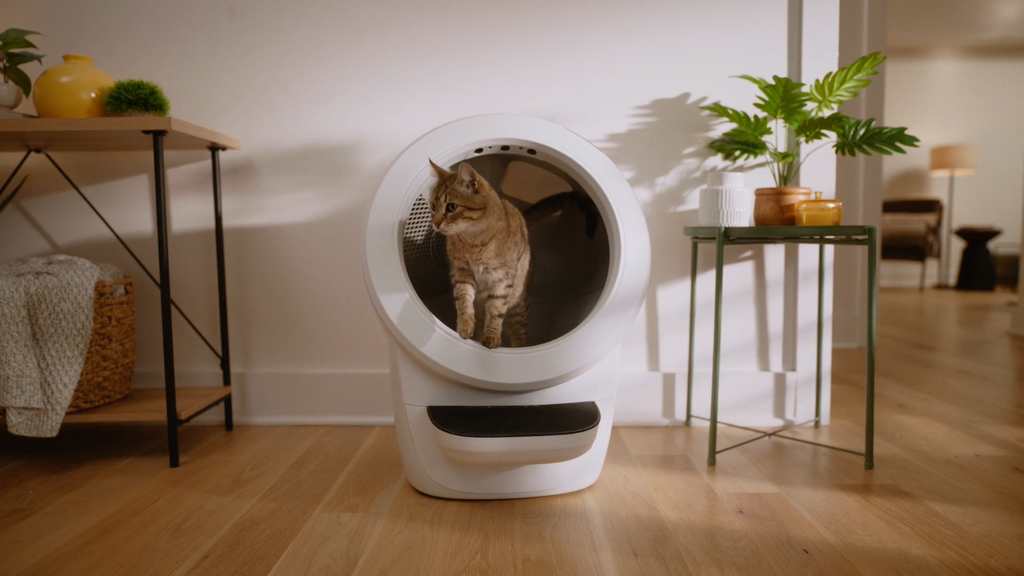
Best for odor and value: Casa Leo’s Loo Too ($599.99)
Litter-Robot-style performance for a bit less. Leo’s Loo Too is a covered, rotating self-cleaner that uses standard clumping litter, with a large 9.5-liter waste drawer for up to four cats and EPA-approved UV sterilization that neutralizes odor and bacteria, plus a notably quiet cycle and app control.
Strength: standout odor control and big capacity at a lower price than the Litter-Robot. Drawback: it’s still a premium spend, and a newer ecosystem than the long-established Litter-Robot.
Where to buy: Casa Leo’s Loo Too (casaleopet.com)
Best camera and AI: Petkit Purobot Max Pro 2 ($499.99)
The high-tech pick. The Purobot Max Pro 2 is a rotating self-cleaner with a built-in camera and AI that can monitor your cat, log visits, and flag health-relevant patterns, alongside the usual app control, odor management, and standard-litter compatibility.
Strength: the richest smart and monitoring features of the group, for less than the top two. Drawback: you’re paying for the camera and AI, which not everyone needs, and the app ecosystem matters more here than on simpler boxes.
Where to buy: Petkit Purobot Max Pro 2 (petkit.com)
Best quiet value: Petkit PuraMax 2 ($399.99)
The value sweet spot. The PuraMax 2 is a rotating-chamber self-cleaner that works with standard clumping litter, offers a large capacity for multiple cats, and is among the quietest in its class, with app monitoring and safety sensors. It delivers much of the premium experience for a few hundred dollars less.
Strength: quiet, roomy, and genuinely good value. Drawback: it lacks the camera, top-tier odor tech, and polish of the pricier models.
Where to buy: Petkit PuraMax 2 (petkit.com)
Budget entry: PetSafe ScoopFree Crystal Smart ($244.99)
The cheapest way in, with one big caveat. The ScoopFree isn’t a rotating globe; it’s a rake that sweeps waste into a covered compartment using disposable crystal trays, with app connectivity. It’s compact, quiet, and by far the lowest upfront price.
Strength: easily the most affordable entry into automation. Drawback: the recurring cost of replacement crystal trays adds up over time, and its smaller capacity suits a single cat best.
Where to buy: PetSafe ScoopFree Crystal Smart (petsafe.com)
What the marketing doesn’t tell you
A few honest caveats worth knowing before you spend:
- “Self-cleaning” still needs you. Every model here removes and stores waste automatically, but you still empty the drawer or trays, refill litter, and clean the unit periodically. It’s far less work than scooping, not zero work.
- Recurring costs vary wildly. Rotating boxes run on cheap standard litter; tray-based systems lock you into proprietary refills. Over time, that difference can outweigh the sticker price.
- They’re big and need power. Globe and chamber designs have a real footprint and need an outlet nearby. Measure your space first.
- Not every cat adapts. Some cats are wary of the movement and noise. Plan to introduce it gradually and keep the old box around at first.
The surprising one
Petkit PuraMax 2. On paper it reads like the budget rotating box, but it’s quiet, roomy enough for multiple cats, uses cheap standard litter, and undercuts the premium tier by a wide margin. For owners who want true rotating-chamber automation without the camera or the $600-plus price, it punches well above its cost and is the model most likely to leave value-focused buyers genuinely satisfied.
The biggest letdown
PetSafe ScoopFree, and not because it’s bad. The rake works and the entry price is tempting. The problem is the math: its low sticker is offset by disposable crystal trays you keep buying, while every rotating box above runs on cheap standard litter. Over a year or two, that recurring cost narrows the gap, and you also give up the larger capacity and rotating performance. It’s the one most likely to cost more than it first appears.
Which robot litter box should you buy?
Match the machine to your household and budget:
- Want the best all-round, multi-cat performance: Litter-Robot 4.
- Prioritizing odor control and capacity for a bit less: Casa Leo’s Loo Too.
- Want a camera and the smartest monitoring: Petkit Purobot Max Pro 2.
- Best value rotating box for most homes: Petkit PuraMax 2.
The honest takeaway: the rotating boxes that run on standard litter, from the PuraMax 2 up, tend to be cheaper to own than a low-priced tray system once you account for refills. Decide on capacity, odor needs, and smart features, factor in the running costs, and any of the top four will serve you well for years.
Robot litter box FAQ
Are robot litter boxes safe for cats?
Reputable models with working weight or radar sensors are safe, because they won’t cycle while a cat is inside. The caution is for kittens and very small cats that may not trigger weight sensors, so pick a model with reliable detection and introduce it slowly.
Do they work for multiple cats?
The rotating boxes here, especially the Litter-Robot 4, Casa Leo, and Petkit models, have large waste drawers built for multiple cats. Tray-based budget boxes are happiest with a single cat, since the smaller capacity fills faster.