Best Automatic Litter Boxes in 2026: The Complete Buying Guide and 3 Top Picks
An automatic litter box promises the dream: never scoop again. The reality is more nuanced. These machines range from a few hundred dollars to nearly a thousand, they clean in very different ways, and some carry recurring costs the price tag never mentions. This guide skips the marketing and focuses on what matters. If you want the best automatic litter boxes, understand the criteria and the true cost first, then pick, because this is an expensive purchase to get wrong.
Below: why the wrong box costs you, the five things that genuinely matter, what the marketing doesn’t tell you, honest price tiers, three top picks confirmed in stock, and the red flags to avoid.
This post contains affiliate links. If you buy through them, we may earn a small commission at no extra cost to you.
Safety note: make sure any automatic box suits your cat’s size and age, since kittens and very small cats need models with reliable weight or motion sensors, and always introduce a new box gradually.
Why the wrong automatic litter box costs you
These are not cheap, so a bad fit hurts. Buy one that’s too small and a big cat won’t use it. Buy one built around proprietary refills and you’re locked into ongoing costs that dwarf the sticker. And a cat that’s spooked by a noisy, poorly designed machine may stop using the box entirely, which is the worst outcome of all.
So the goal isn’t just automation, it’s the right automation for your cat, your number of cats, and your budget over time. Get those right and an automatic box is a genuine quality-of-life upgrade.
The 5 things that matter in the best automatic litter boxes
Five factors decide whether one of these is worth the money.
- Cleaning mechanism and litter type. A rotating globe sifts clumps from any standard clumping litter; rake systems sweep into a tray; crystal systems use disposable trays. The mechanism drives both performance and cost.
- Capacity and multi-cat use. Waste-drawer size and how many cats it can handle. Bigger drawers and larger entries suit multiple or large cats.
- Safety sensors. Weight and motion sensors that stop the cycle when a cat enters. Essential, and especially important for kittens and small cats.
- Running costs. The quiet one. Proprietary crystal trays or special litter add up over a year and can change which box is actually cheapest to own.
- Smart features. App control, waste-level alerts, and weight or usage tracking that can flag a health change. Genuinely useful, not just gimmicks.
Rank these for your situation. One cat on a budget and a three-cat household have very different best answers.
What the marketing doesn’t tell you
A few honest caveats the product pages skip:
- Recurring costs can dwarf the price. Crystal-tray and proprietary-litter systems look cheap upfront but cost more to feed. A pricier box that uses cheap regular litter can be cheaper over time.
- They’re big. Automatic boxes, especially globe designs, have a large footprint and need a power outlet nearby. Measure your space first.
- Not every cat takes to them. Some cats are wary of the movement and noise. Plan to introduce it slowly and keep the old box around at first.
- Small cats need good sensors. Lightweight kittens may not trigger weight sensors reliably, so check the safety system before buying for a small cat.
Price ranges and what you get at each tier
Confirmed pricing clusters into three honest tiers:
- Budget, roughly $200 to $250. Crystal-tray or rake systems. Low upfront cost, but watch the recurring tray expense.
- Mid, roughly $350 to $500. Smart globe or drawer systems with apps, larger capacity, and standard-litter compatibility. The value sweet spot for many homes.
- Premium, roughly $600 to $900+. Top-tier globe boxes with the best odor control, capacity, safety, and health tracking. Most capable, highest price, but low running costs.
Spending more usually buys capacity, safety, and lower running costs, not just polish. Factor the litter or tray costs into the real total before you decide.
Top 3 automatic litter boxes by budget
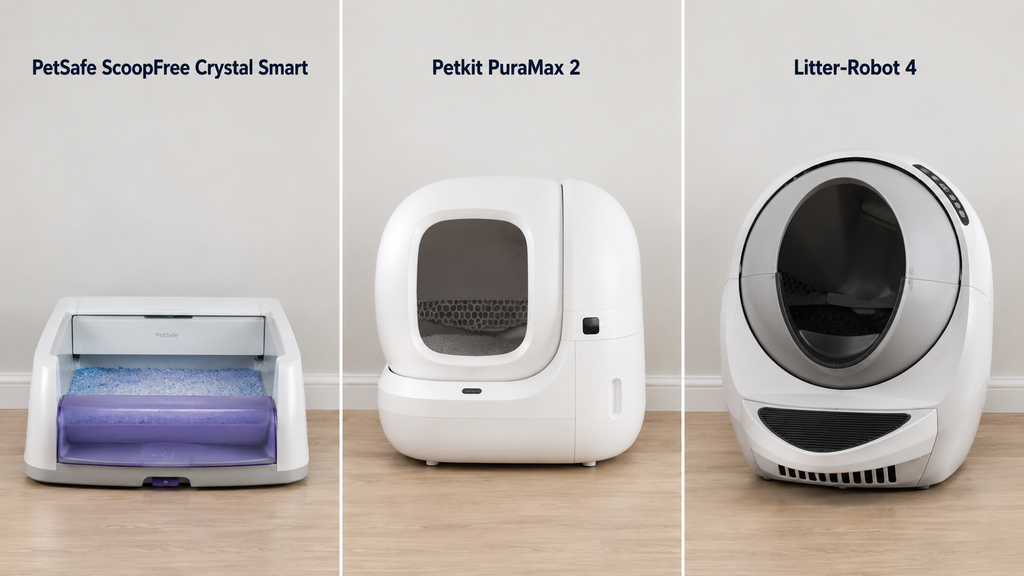
| Litter box | Best for | Litter | Price |
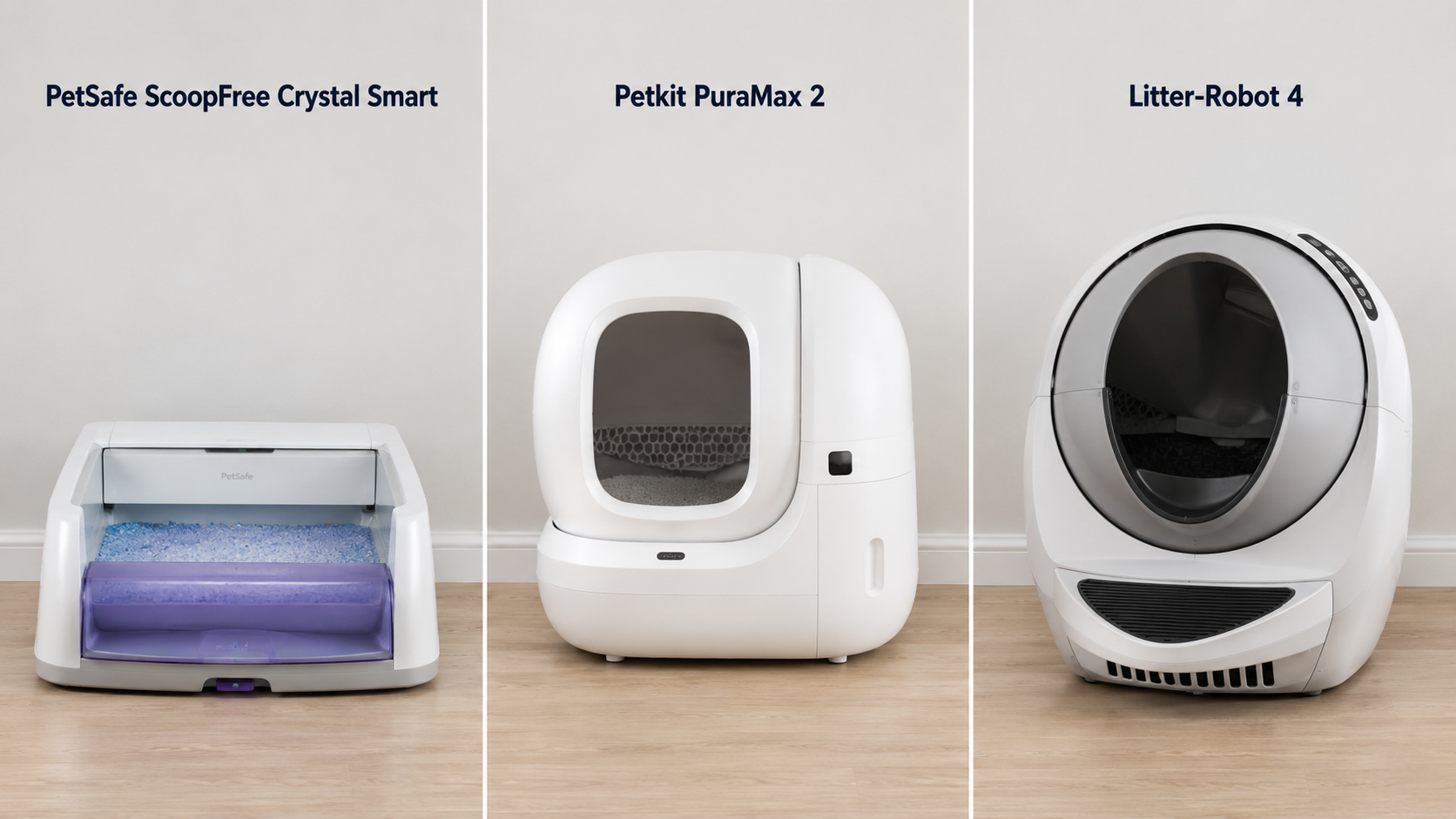
| Litter-Robot 4 | Best overall, multi-cat | Any clumping | $699 |
| Petkit PuraMax 2 | Best value smart globe | Any clumping | $399.99 |
| PetSafe ScoopFree Crystal Smart | Best budget | Crystal trays | $244.99 |
Best automatic litter boxes overall: Litter-Robot 4 ($699)
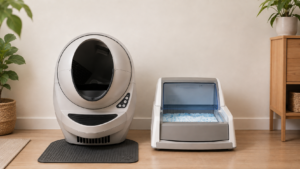
The premium benchmark. The Litter-Robot 4 uses a rotating globe that sifts clumps from ordinary clumping litter into a large, carbon-filtered sealed drawer, which means excellent odor control, long stretches between emptyings, and cheap everyday litter. It adds app control, waste-level alerts, and weight tracking that can flag changes in your cat’s habits, and its capacity makes it the standout for multi-cat homes.
At $699, it’s the most expensive pick, and its low running costs and capability offset that over time. If you want the best and can absorb the upfront price, this is it.
Where to buy: Litter-Robot 4 Automatic Litter Box (litter-robot.com)
Best value smart globe: Petkit PuraMax 2 ($399.99)
The middle path, and a strong one. The PuraMax 2 is a smart globe-style box that works with standard clumping litter, offers a large capacity suitable for multiple cats, and includes app monitoring, odor control, and safety sensors. It delivers much of the smart-globe experience for a few hundred dollars less than the Litter-Robot.
Priced at $399.99, it’s the value sweet spot. You give up some of the Litter-Robot’s refinement and ecosystem, but for most homes wanting standard-litter automation without the top price, it’s the smart buy.
Where to buy: Petkit PuraMax 2 Automatic Litter Box (petkit.com)
Best budget pick: PetSafe ScoopFree Crystal Smart ($244.99)
The lowest entry price, with one honest catch. The ScoopFree uses a rake that sweeps waste into a covered compartment and disposable crystal trays that absorb moisture and odor, plus app connectivity. It’s compact, quiet, and the cheapest way into automation. The catch is the recurring cost of replacement crystal trays, which adds up over time.
At $244.99 it’s the budget champion upfront. Just price in the ongoing trays, and remember its smaller capacity suits a single cat best.
Where to buy: PetSafe ScoopFree Crystal Smart (petsafe.com)
Red flags to avoid
An automatic box can disappoint in predictable ways. Watch for these:
- Hidden refill lock-in. If it only works with the brand’s proprietary litter or trays, calculate the yearly cost before buying.
- Weak or missing safety sensors. A box that cycles while a cat is inside is dangerous. Reliable weight or motion sensors are a must.
- Too small for your cat. Big cats need a large entry and chamber. Check the dimensions against your cat, not just the marketing photos.
- Poor app and support reputation. These are tech products. Skim recent reviews for connectivity problems and customer-service complaints.
Automatic litter box FAQ
Are automatic litter boxes safe for cats?
Reputable models with working weight or motion sensors are safe, because they won’t cycle while a cat is inside. The caution is for kittens and very small cats, which may not trigger weight sensors, so choose a model with reliable detection and introduce it slowly.
Do they really eliminate scooping?
Mostly. They remove and store waste automatically, but you still empty the waste drawer or trays, refill litter, and clean the unit periodically. It’s far less work than scooping, not zero work.
Will my cat actually use one?
Most adjust within a week or two if you introduce it gradually and keep the old box nearby at first. Some cats need patience, and a few never warm to the movement, so watch your cat’s behavior during the switch.
So, which should you buy?
Choosing among the best automatic litter boxes comes down to your cat, your numbers, and the true cost over time, not just the sticker. The Litter-Robot 4 is the premium winner for multi-cat homes that want top performance with cheap everyday litter, the Petkit PuraMax 2 is the value smart-globe pick, and the PetSafe ScoopFree is the budget entry point as long as you factor in the crystal trays. Match the box to your household, prioritize safety sensors and running costs, and you’ll buy a machine that earns its price in scooping you never have to do again.